

After the First Gate : The Justin Posey Treasure
Reading Stanzas 3 & 4 of the Justin Posey Treasure Hunt

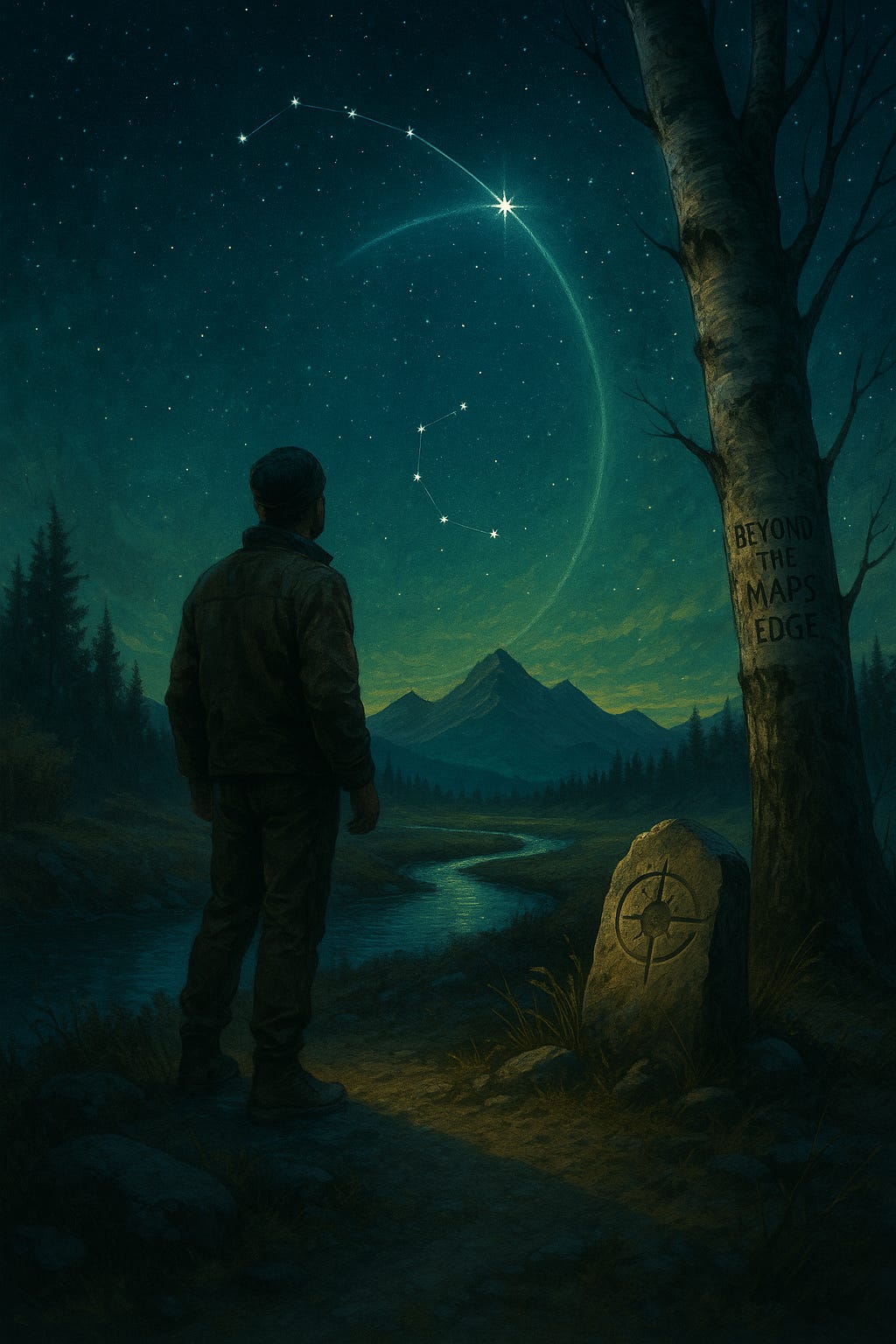
📍 The Terrain of Thought
Before we talk about lines, we need to talk about layers.
Posey’s poem isn’t flat. It doesn't lie quietly on the page. It folds. The deeper you get into it, the more those folds become geographic, philosophical, even celestial. And somewhere after the opening—if you've followed faithfully and made it through what many are calling the first gate—you’ll feel it. The poem bends. The tone drops.
This isn’t where beginners thrive.
This is where the hunt starts asking questions instead of giving directions.
🪨 Where the Middle Clues Begin to Shift
As you progress deeper into the poem—beyond the opening momentum—there’s a noticeable shift in tone. Clues that once seemed straightforward begin to grow symbolic. Some point toward geological markers. Others hint at something almost astronomical in nature.
Many treasure hunters refer to a moment in the poem where a "gate" is mentioned. Some believe it to be symbolic, while others suspect it refers to a real passage, either natural or human-made. That single word has sparked field searches across multiple terrains.
And then there's a reference to silence. Not metaphorical stillness—but actual terrain-based silence. Locations where noise disappears. Where sound gets absorbed. Where the land feels still enough to suggest you're close to something intentional.
Hunters have also flagged a recurring theme involving arcs—some pointing to star alignments, others mapping across the ground. These may not be directional in a typical compass sense, but suggest geometry with intent.

🧭 What the Poem May Be Doing
If the earlier stanzas are guiding you to a location, the middle of the poem may be filtering your perception.
It’s not trying to help you anymore. It’s trying to see what you’ll do next. Whether you recognize structure. Whether you sense design. Whether you notice when the poem stops being a guide and becomes a mirror.
Some researchers believe the middle stanzas test:
Your ability to observe terrain as symbol.
Your patience to endure silence without distraction.
Your instinct to notice patterns that aren’t obvious—geological, astronomical, or mathematical.
This is where most turn back.
🧠 LESSON: The Poem Evolves. So Must You.
The early stanzas offer clear traction. The middle ones ask for vision. They reward abstraction. Alignment. Discipline.
You’ll need to:
Zoom out. See structure.
Zoom in. See pattern.
Stay grounded—but not rigid.
Posey isn’t just hiding a treasure.
He’s hiding a method of perception. And he’s buried it right in plain sight.
🎞 CLOSING THOUGHT
If the poem began as a trail... it quickly becomes a test.
And if you're standing in a place where the ground has gone quiet, the lines feel sharper, and the sky starts to matter—
You may not be lost.
You may be exactly where it starts to turn.
—Mike